

A Bronx strike history
1900s-1930s

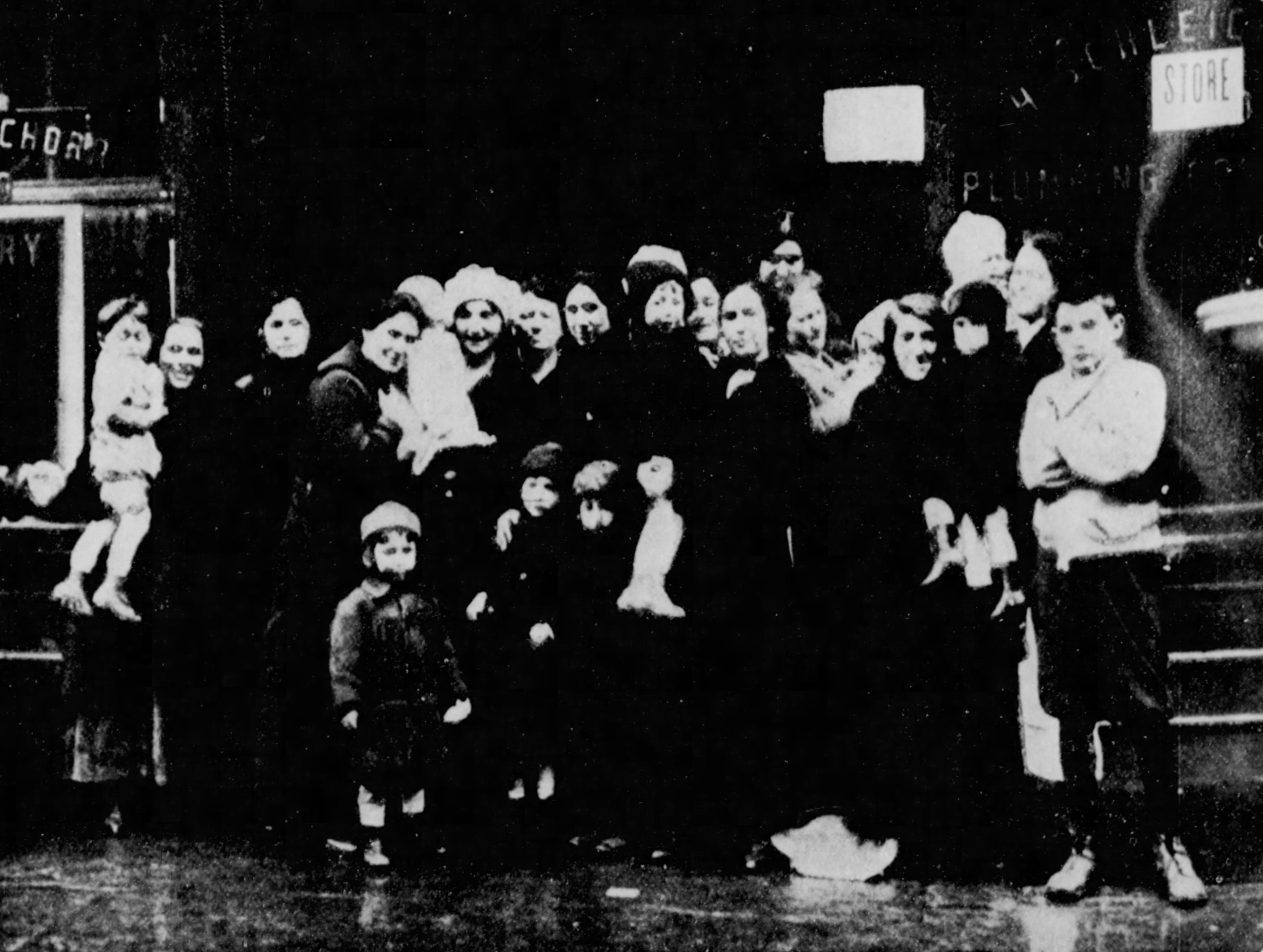
In January 1917, Crotona Park residents, who for years faced increasing rents alongside no heating, formed the Bronx Tenants League. The group consisted of tenants who were working-class, Russian Jewish immigrants, many of whom moved north from the Lower East Side in search of more humane housing conditions. More than 500 tenants, across 25 buildings owned by two firms, gathered in December, and less than a month later, they rejected a rent increase and set up a picket line.
Many of these residents had oral leases, and when landlords took them to court for nonpayment, judges often sided with landlords, “saying that in the absence of a written lease the tenants had no choice but to pay or move. When the landlords threatened to bring in the marshals, the strike collapsed,” writes Robert M. Fogelson in The Great Rent Wars: New York, 1917-1929. Tenants continued to meet, eventually holding a meeting on January 17, where they enrolled 150 charter members and officially established the Bronx Tenants League.
A year after the union was formed, 4,000 Bronx tenants, across various buildings, refused to pay rent increases. They were given eviction notices stating owners were not required to provide heating because rent covered only the physical spaces tenants occupied. The Bronx Tenants League supported these residents, who were spread across Mott Haven, Tremont, and Morrisania. The union also supported 40 families who struck on 138th Street a year later, in 1919.
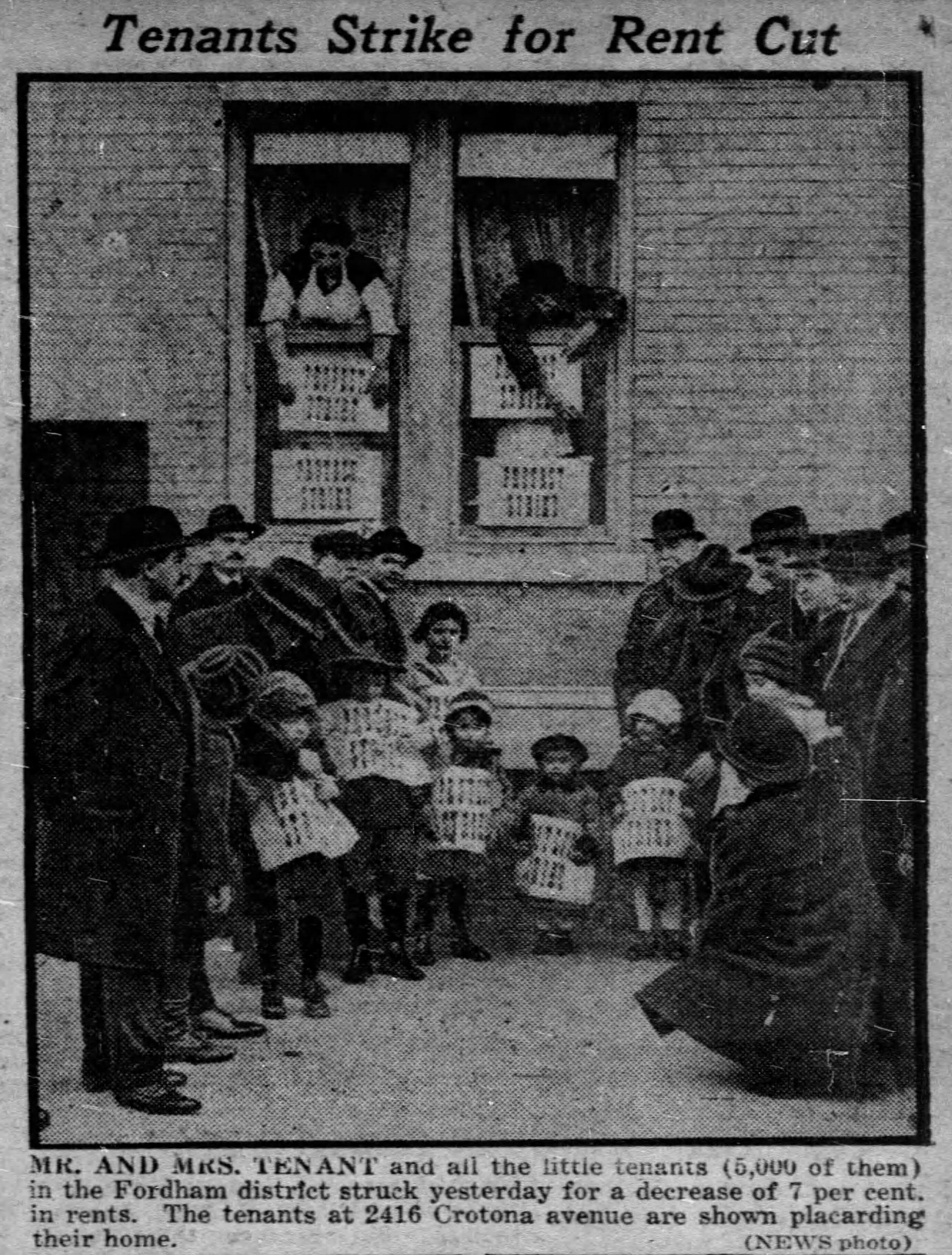
On April 8, 1919, more than 300 tenants staged a protest at the Bronx Municipal Court demanding a judge prevent a landlord from evicting them, and in August of that same year, 68 families protested rent increases across various Bronx neighborhoods, including tenants living on 158th street and Trinity Avenue. On December 1, 1920, more than 4,000 tenants living in East Fordham struck to demand a 7% rent decrease. And on January 26, 1932, 4,000 Bronx tenants struck at three different Bronx buildings, including one on Olinville Avenue.
Tenants withheld rent and fought for legislation that would hold landlords responsible for the inhumane conditions in their properties. They met with city and state officials. Fogelson writes that tenants, especially following the war, became more militant fighting landlords, in particular housewives and other domestic care workers who stayed at home, managed households, and provided childcare. They recruited neighbors to join anti-landlord strikes, mobilized shopkeepers, organized picket lines, and housed evicted families. They decided when to strike, which owners to target, and what kind of childcare to provide strikers. They protected each other from police officers who violently attempted to break their picket lines.
Bronx residents organized around the inhumane conditions they saw in their buildings and workplaces, galvanized by the city’s energy. NYC at the start of the 1900s was working-class, immigrant. There were labor unions, community newspapers in various languages, political groups, and organized striking. Worker and tenant actions happened all over the city. Tenants were workers and workers were tenants, and each struggle was connected. Communities understood both employers and landlords as parasites, exploiters, choosing profits over tenants and the working class.
In 1917, the United States entered World War I, leading to a coal shortage across the country and city. Thousands of workers lost jobs and thousands died. After the war, fuel costs went up and the cost of living in New York City went up by 60%. The city’s population was also growing, eventually leading to a housing shortage. Landlords, running out of the fuel they used to heat, power, and light their buildings, deprived tenants of hot water and heat. In late 1917, temperatures dropped to -13 degrees Fahrenheit, the lowest since 1871 when weather record-keeping began. “Many people went to bed to stay warm, often with overcoats on. Hundreds suffered from frostbite, some losing fingers, toes, and ears. Thousands died of pneumonia and other respiratory diseases. The situation got so bad that some New Yorkers waited all night in front of the coal yards,” writes Fogelson.

#/media/File:1917_Crotona_Park_rent_strike._New_York_Tribune_Sun_Jan_14_1917.jpg)


#/media/File:Tenants_Strike_for_Rent_Cut,_Daily_News_Sat_Dec_4_1920.jpg)
Tenants here were sick, freezing, exhausted, many also factory and garment workers fighting against unsafe conditions in other parts of the city. Landlords raised rents, sometimes from $3 to $5 a month, while also refusing to address repairs. They ignored tenant leases, regardless of whether they were oral or written, and often threw families and their furniture out with very little to no notice if they purchased their own heaters or refused to pay. Fogelson writes, “By early February New York had received so little coal that the Bronx, whose residences and businesses normally consumed five thousand tons a day, was down to its last thousand. As one of its many long-suffering tenants told a reporter, ‘We have had no heat all winter, except what was turned on in the mornings to keep the pipes from bursting.’”
Everything happening here was connected to worker movements struggling and fighting all across New York City. From 1899-1900, newsies—young children, often orphaned, who delivered newspapers throughout the five boroughs—went on strike to demand better wages. In 1907, a 16-year-old led one of the city’s largest rent strikes. In 1909, 20,000 Yiddish-speaking immigrants, the majority of them in their early 20s, or teens, led an 11-week strike in the shirtwaist industry in NYC. Two years later, in 1911 there was the Triangle Shirtwaist Factory fire that left 123 factory workers dead and led to laborers striking, and that same year, there was a 2,000-person sanitation strike in December 1911.
In the Bronx, on April 2, 1900, 600 rock drillers and safety engineers went on strike demanding shorter hours and higher wages. In 1902, housewives in the Bronx and other parts of NYC protested the rising costs of meat, boycotting butcher shops. On July 6, 1921, 170 drivers working at a milk main station on 165th Street and Webster struck for one day after one of the workers was unfairly fired. An article in The New York Times described the milk company as surprised by the Bronx action: “An official of the Sheffield Farms Company said that for some time a former union official had been agitating among the drivers, but all previous attempts to bring about a strike having failed they did not consider the Bronx situation of sufficient importance to cause concern until the strike actually was put into effect.” In June 1936, organizers attempted to launch a campaign with the domestic workers of the Bronx Slave Market. And a year later, on September 8, 1937, 2,000 mechanic workers and helpers went on strike here and in Manhattan.
Last month, I wrote about the 1968 sanitation strike in NYC. After writing about its connection to labor struggles in other cities, I wanted to learn and write about our borough’s strike history and how it connects to the Bronx’s material realities today. I want to learn from the different ways BX tenants and workers are always engaged in a battle for a more dignified life, a safer material world.